Keep your IUL or surrender it? Check your own policy first.
Upload your indexed universal life (IUL) illustration. We read what surrendering returns in every year, find when the policy first passes what you paid in, and test whether it stays in force through weak markets if you keep it.
Upload your IUL illustration
Free to upload. No payment required to see what we found.
For the easiest experience, complete your analysis on a computer.
Drop your illustration here
or click to choose a PDF, up to 25MB
Make sure to include the We can’t analyze an illustration without its year-by-year table of policy charges. It’s usually called the Annual Cost Summary or a Policy Charges report, and it’s typically near the very end of the illustration: a table running several pages, one row per year to age 100 or 120. For each year, it lists the premium charge, policy fee, cost of insurance and other charges in dollars.It’s often optional, so the copy you were given may not have it. If not, ask your agent to run the illustration again with it included.Not sure? Upload it anyway, and we’ll let you know if it’s missing..
Rather not send the whole document? You can first, or type the figures in yourself. We read your PDF once, take the figures the analysis needs, and delete the file. What we keep is a table of numbers — premiums, charges, ages, values. Not the document, not your address, not your policy number.
What you will see
Both choices, side by side, on your own figures.
The premiums you have paid are the same whichever way you decide. These are the figures that change between keeping the policy and ending it.
What surrendering returns, each year
The surrender value your illustration prints for every year, and the surrender charge taken out of it until that charge ends.
When it passes what you paid in
The first year the surrender value, after tax, reaches the premiums paid, in strong markets and in weak ones.
Whether the policy could lapse
We run the policy to age 100 in every market we test and show which ones, if any, it lapses in, and at what age.
A loan against a surrender
The largest loan the policy can carry and stay in force to 100, and how borrowing compares with surrendering.
The policy against investing
The same premiums in an investment account, after the taxes and costs on each side, so you can see which came out ahead in which markets.
What the carrier can change
What happens to the cash value if the cap and spread move toward their guaranteed limits, or the cost of insurance doubles for 10 years.
On a real policy
What we found when we tested one.
Question 1
Should I surrender my IUL, or keep paying?
What you would receive depends on the year, and taking money out does not have to mean ending the policy.
Surrender value, as a share of the premiums paid so far
Year 1
59%
Year 2
77%
Year 3
86%
Year 4
92%
Year 5
98%
Year 6
104%
What you paid in
One real illustration, at its illustrated 6.59% rate.
What surrendering returns, year by year
On the policy we analyzed, surrendering in year 1 would return about 59% of the premium paid. The surrender value does not pass the total premiums paid until year 6, and that assumes the illustrated rate every year. We read the surrender values from your own illustration.
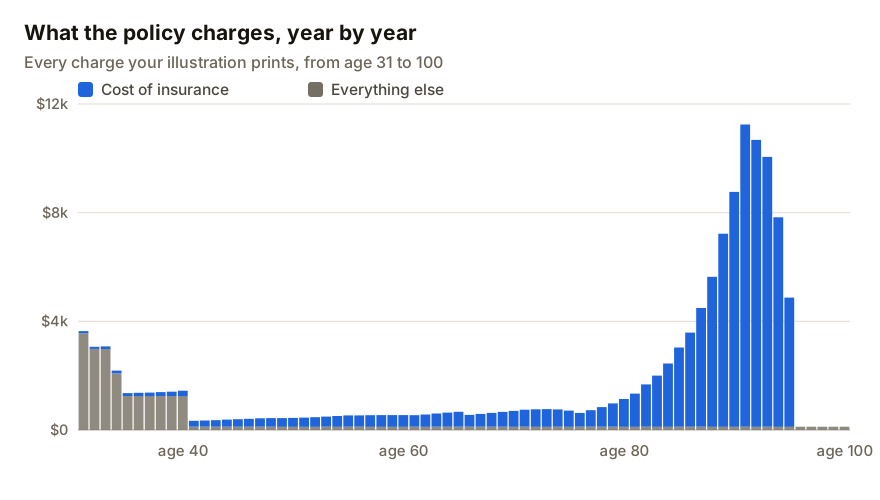
On the policy we analyzed, the heaviest charges come in the first 10 years. After that they are small next to the account, until the cost of insurance climbs from the late 70s. How many of your policy's heavy early years are already paid changes what keeping it costs from now on.
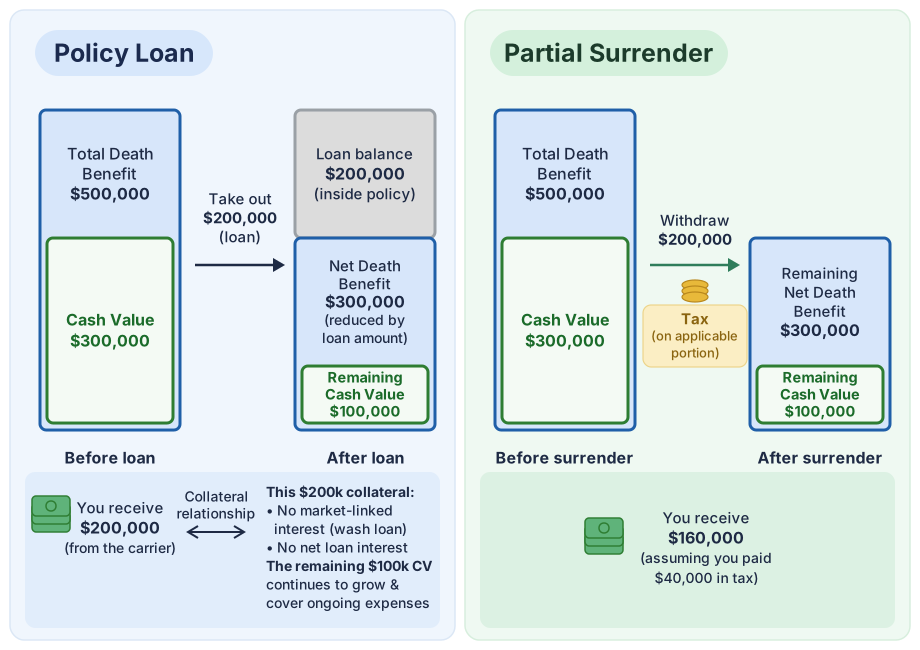
A partial surrender takes money out and may be taxed. A policy loan is borrowed against the cash value, and the policy stays in force. Both lower the death benefit by the amount taken.
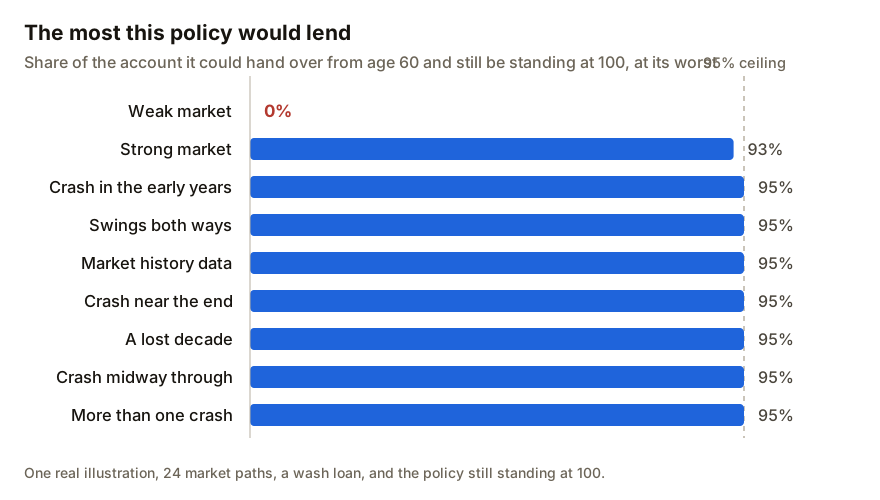
We searched for the largest loan from age 60 that still keeps one real policy in force to 100. In most markets it was 95% of the account, the most the policy allows. In a weak market it was 0%.
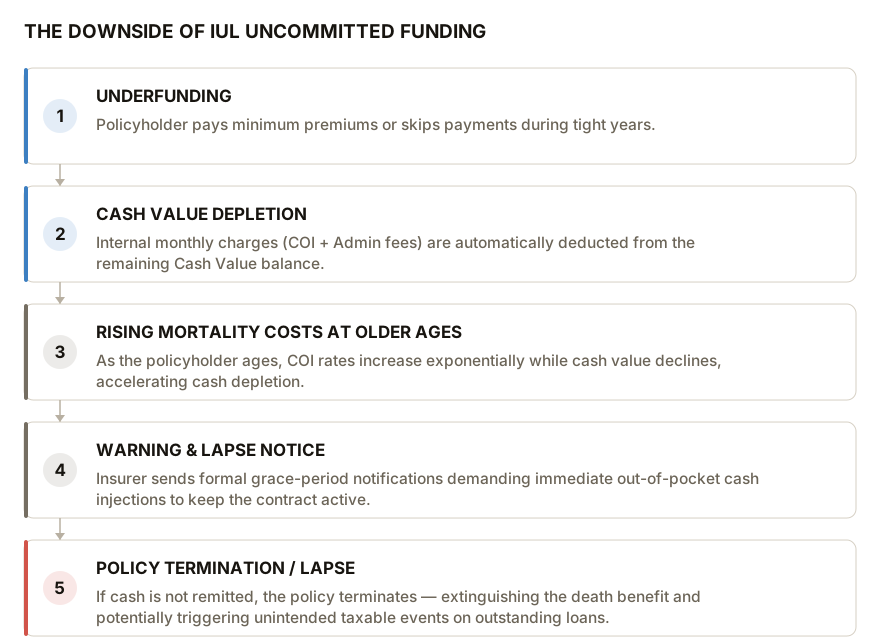
A policy lapses when the cash value can no longer pay the charges. On the policy we analyzed, a crash did not empty the cash value, but a long flat market did.
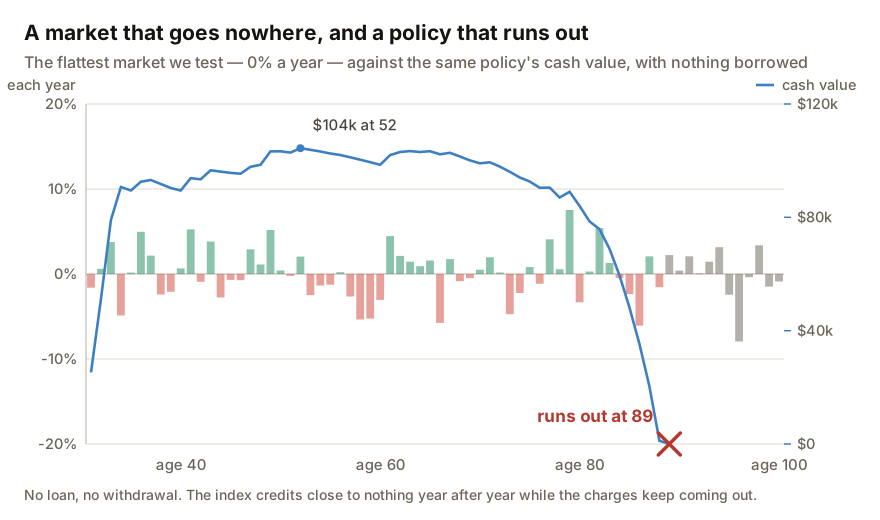
A flat market, and no loan at all
In the flattest market we tested, the index credited close to nothing year after year while the charges kept coming out. With nothing borrowed, the cash value reached zero at age 89.
An IUL lets you pay less in a tight year. The charges still come out of the cash value every month, and the cost of insurance rises with age, so a policy funded near the minimum can run out.
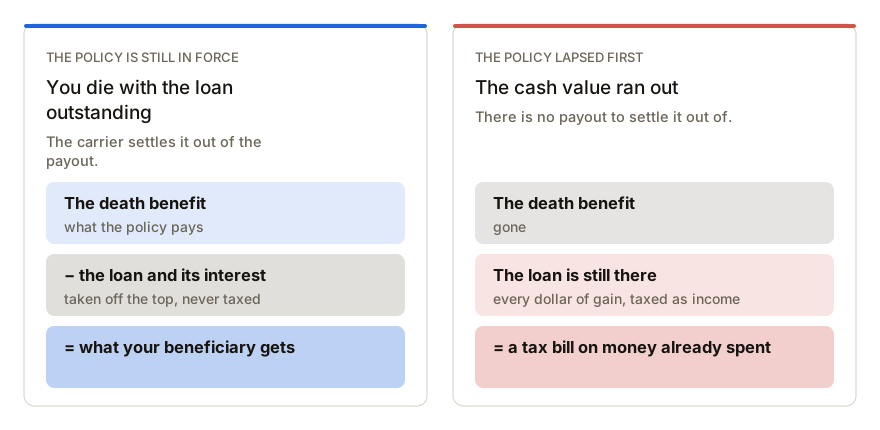
If the policy is in force when you die, the loan is paid out of the death benefit and is never taxed. If it lapses first, there is no death benefit, and the gain you borrowed is taxed as income.
You receive the cash surrender value: the cash value minus any surrender charge, and minus any loan outstanding. The death benefit ends. On the policy we analyzed, the surrender charge stayed the same for the first 3 years and then fell every year until it reached zero in year 11. Surrender vs. loan →
Do I pay tax when I surrender an IUL?
You can. A full surrender can create taxable income when what you receive is more than your investment in the contract, which is generally your cost basis. How each way out is taxed →
Can I take money out of an IUL without surrendering it?
Yes. A policy loan borrows against the cash value and keeps the policy in force, and a partial surrender withdraws part of it. Both lower the death benefit. A loan stays tax-free only while the policy stays in force: if it lapses with a loan outstanding, the gain borrowed is taxed as income. How IUL loans work →
What happens if I stop paying premiums on my IUL?
The charges keep coming out of the cash value every month. If the cash value can cover them, the policy stays in force. If it cannot, the policy lapses, and the cost of insurance rises with age, so the charges grow over time. Can an IUL lapse if you pay less? →
How it works
See what we found before you decide.
1
Upload your illustration
The PDF you were given. Take out your name and policy number first if you like.
2
Check what we read
We take the figures from your illustration and rerun its calculations to within 5%. You can correct anything we got wrong.
3
See what we found
A preview of the findings is free. You decide afterward whether you want the full report.